Recap // BEAP Symposium 2026 - Keynote Leslie Kern
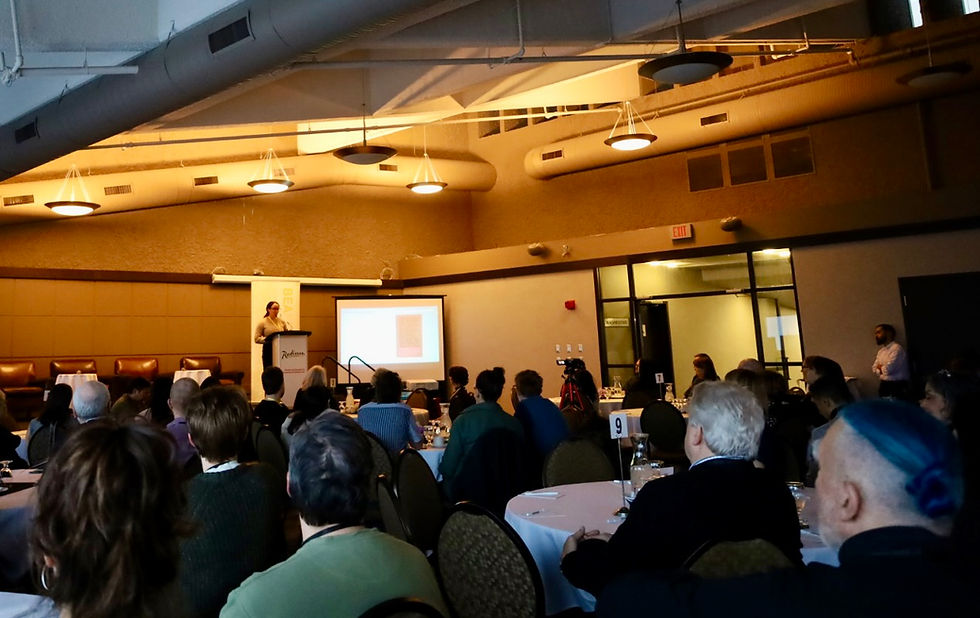
March 12th marked our opening of the BEAP Symposium 2026 - Intersections: People, Place & Practice event. The tone for the 2-day Symposium was set immediately with a keynote from Leslie Kern, author of Feminist City: A Field Guide, and it was nothing short of grounding, confronting, and deeply validating.
Cities Were Never Designed for Everyone
Kern’s keynote challenged something that many of us feel instinctively but rarely see articulated so clearly: cities have historically been designed around a very specific user…able-bodied, cisgender, heterosexual men.
From transit systems to public space, from safety to accessibility, the gaps become obvious:
• Caregivers navigating strollers through infrastructure that doesn’t account for them
• Women moving through spaces where safety is an ongoing calculation
• Queer communities navigating environments that were never designed with their existence in mind
Even something as seemingly straightforward as bike lanes becomes layered- who feels safe using them, who has access to them, and who they actually serve.
Kern not only points out the problems, but she reframes the conversation. Cities are not fixed. They are designed, which means they can be redesigned.
“My Fear Is Not Irrational”
One of the most striking elements of the evening was how clearly Kern named the lived experience of moving through public space as a woman.
Quiet negotiations, constant awareness, and the small, daily calculations that shape how we occupy space.
What’s often dismissed as “fear” is, in reality, a rational response to environments that have not been built with everyone in mind.
Leslie’s keynote was followed by a mixer with conversations that carried the same themes:
• How do we design cities that support care work, not just productivity?
• What does equitable access actually look like in a Prairie context?
• Where are we unintentionally reinforcing exclusion in our own work?
Thank you, Leslie!